
MADS: DO YOU SEE THEM NOW?
- NoName Gallery
- Jul 23, 2025
- 3 min read

Updated: Jul 28, 2025
Let's cut through the noise: art that matters makes you see things differently, makes you feel something real. For Mads, art is a wake-up call, a vibrant slap to the face of our power structures and the bullshit we're fed about what’s sacred. Religion, money, politics, brands – Mads’ work drags these into the light, challenging us to take our power back. This hits straight at the heart of "Next Levels: The Art of Healing," because real healing isn't about soft edges; it's about raw honesty, connection, figuring shit out for yourself, and demanding to be seen, heard, and understood on your own terms.


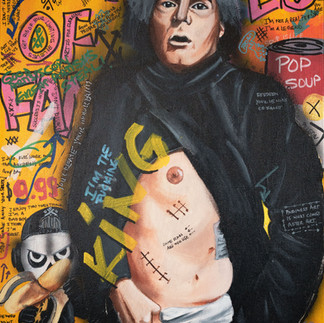
The "Art Iconz" series is where Mads throws down her gauntlet. Here, legendary painters – Keith Haring, Andy Warhol, Salvador Dalí, Vincent Van Gogh, Jean-Michel Basquiat, among others – are yanked out of history and dropped into today. Mads doesn’t pick these icons by chance. Each one wrestled with their own demons, fought to be seen, and often only got their flowers after they were gone. So Mads dresses them in today’s symbols of "power" – Gucci, Warhol's Campbell's Soup cans, General Electric logos, even Batman – and shoves them back in our faces. The message, dripping with sarcasm, is clear: "DO YOU SEE THEM NOW?" It’s a raw critique of a world that often only values genius when it’s dead or branded, forcing us to ask who really holds the power to decide who and what matters.


And people do see it. There’s this thing a gallerist dubbed "THE MADS EFFECT": folks walk in, and Mads' work grabs them. They make a beeline for it, check it out from across the room, then get drawn in, closer and closer, until they’re practically nose-to-canvas. Why? Because there’s more than just a pretty picture. Up close, the layers hit you. The main icon pops, sometimes with an airbrushed shadow that makes them jump right off the canvas. Then you see the quotes. Big, bold ones from the icon themselves, their own words demanding to be heard. But then, smaller, almost hidden, are other quotes – from different artists, thinkers, whoever Mads felt belonged in the conversation. It’s a mashup of voices. And then there are the doodles – Mads’ own, mixed with nods to giants like Haring and Basquiat, a way of honoring them, showing their DNA is baked into this whole genre. It’s a lot to take in, a story that makes you reflect.


The portrait of Andy Warhol in this series cuts especially deep, right to the bone of this "Art of Healing" theme. Mads painted Warhol showing his scars – the real, physical marks from when he was shot. This wasn't just an artistic choice; Mads was creating this piece at the exact time of her own top surgery. That parallel – Warhol’s raw vulnerability after a violent trauma, and Mads’ own journey of physical transformation and healing – it’s all there. It’s about facing pain, owning your body, and finding a new strength. This painting isn’t just looking at an icon; it’s looking at survival, adaptation, and what it means to truly be seen, scars and all.




This intense, layered work doesn't come from nowhere. Mads’ daily meditation practice isn't about finding some fluffy peace; it's about "quieting the mind," "letting go of resistance," so the real, potent ideas can break through. That clarity, maybe mixed with the vibrant, empowering energy of a Miami background, fuels the art.


So, when you stand in front of a Mads piece, it’s not just an image. It’s a challenge. It’s an invitation. Viewers talk about the curiosity, the jolt of happiness from the colors, and a straight-up feeling of empowerment. Mads is using the "Art Iconz" to make us question, to make us see the game. And by seeing it, by reclaiming our own sight from the bullshit, we start to heal. That’s taking your power back. That’s the next level.


Comments