
An Interview with Natalie Hope McDonald
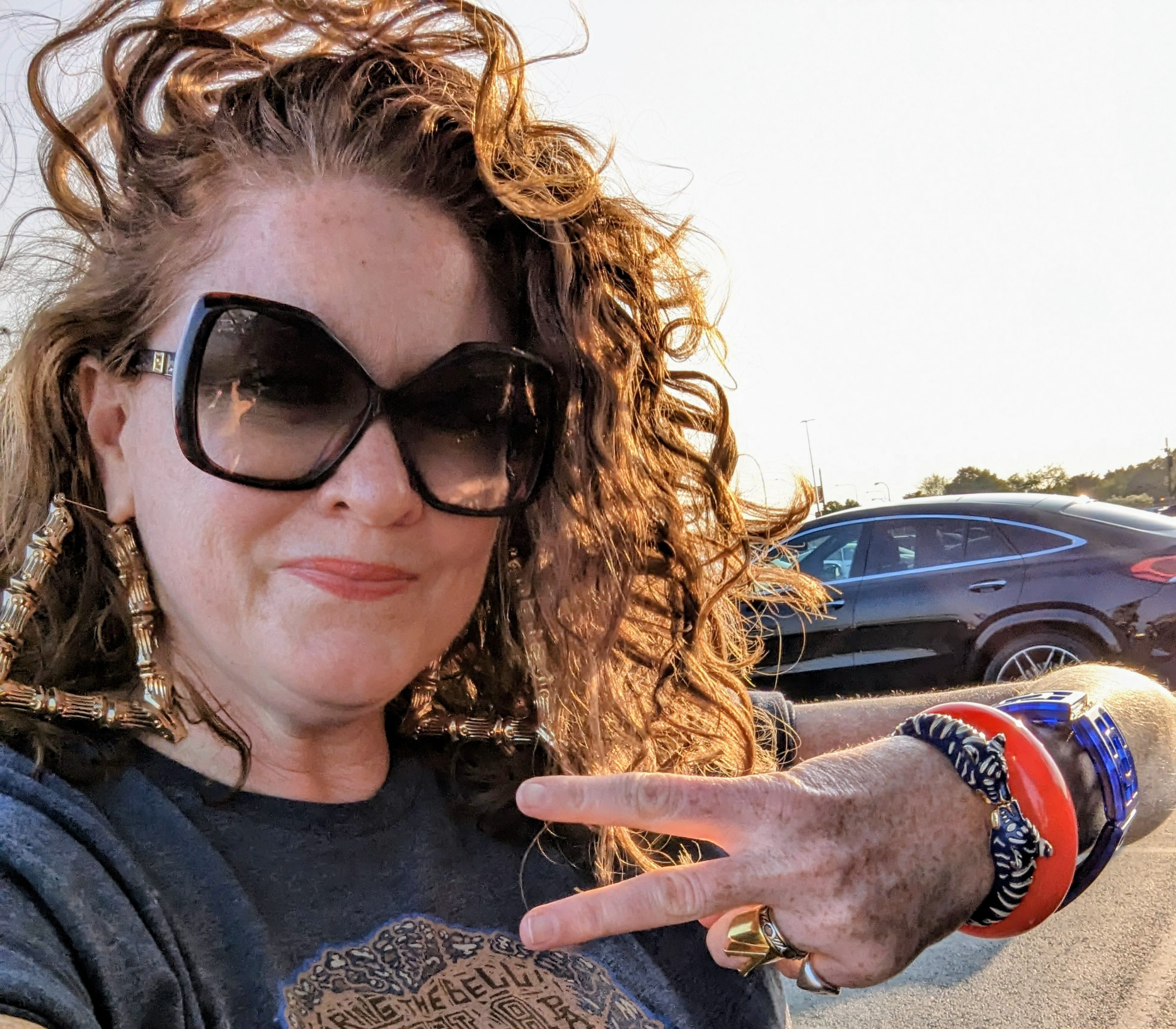

I had the absolute pleasure of sitting down with Natalie Hope McDonald for this month's feature. A truly gifted, multifaceted artist with a very inspiring journey.
It just so happens that since we chatted, Natalie has been recognized as a finalist in The People's Artist competition presented by Johnny Depp. Bringing his passion for artistic expression to this year's event, he has invited creators everywhere to step forward, be seen, and support meaningful social impact through art. Voting starts next week so please cast your vote for Natalie when it's time! She is so deserving.
We also had an amazing drop this month of newly inspired pieces, all available in the gallery or the online shop; Natalie Hope McDonald.
Life is (an) ART. Enjoy!
Q: Tell us your “About’ story; as an artist you’ve been referred to as a fine artist, a painter, an illustrator, a writer, a muralist and more. How do you describe Natalie Hope McDonald?
Natalie: Over the past few years I’ve made a pretty big career transition from being a journalist to full-time artist. I worked for many years in the media covering a wide range of subjects - and I really valued that work. But I knew deep down I needed to be working as an artist for a very long time.
I knew that to make it work I’d need to be versatile, at least at first, and open to commercial opportunities. It turns out some of these have been incredible - like making several enormous murals in the historic Bourse Building and installing my art in peoples’ homes. I also enjoy the occasional job as an illustrator.
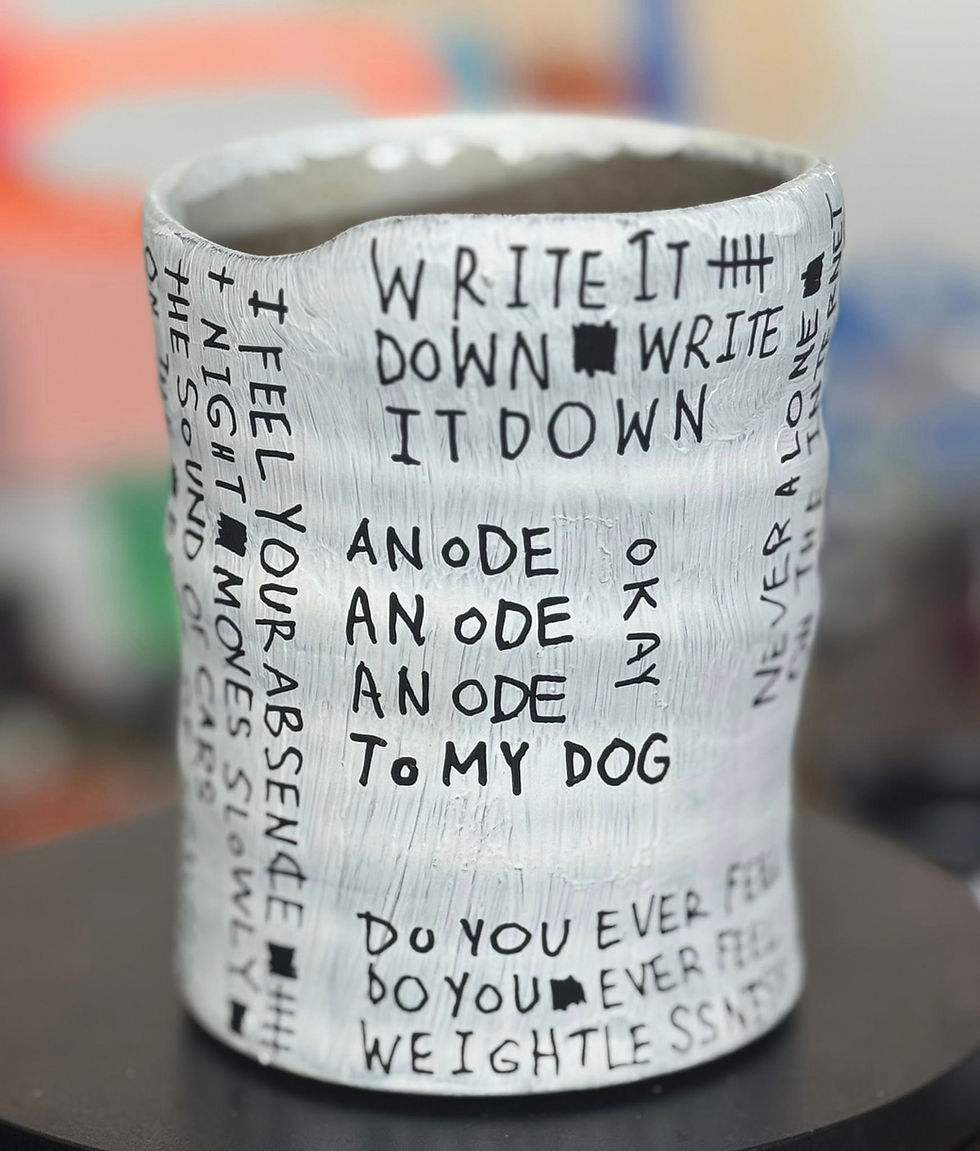
Mostly though I work as a painter in a few different mediums. More recently I’ve been focused on text-based art on found materials. It’s a process that has really led me to think a lot differently about visual art and how we ultimately communicate when it’s not simply on a flat surface. I think part of the appeal also has to do with missing the world of words I lived in for so many years as a writer.

Q: Reflecting on your journey, what key milestones and challenges have shaped your inspiration as an artist? Any particular mentors that have impacted you significantly?
Natalie: Confidence. I have always considered myself an artist even when I wasn’t working professionally as one. It’s always been integrated into my life since I was a child. But I think what changed was being able to find my authentic voice and realizing that I deserve to have a seat at the table.
I often wish I had found my voice and confidence when I was a bit younger, but I truly believe my experiences in life, often the most challenging ones, have provided me with the foundation I needed to do the kind of work I always wanted to do. I have so much I can delve into in my own life today as an adult woman that has become the truly authentic purpose and honest motivation for my art. I feel fortunate I got to this point and feel a certain ease with it. Is it hard sometimes? Of course. I knew that I would need to go places that would sometimes be hard. But isn’t that part of life? I balance this out with sometimes funny, pop-driven work too.
I think losing my mother when I was younger has had the biggest impact on my life. She was my toughest critic. And losing her so young taught me that life isn’t guaranteed. If you have a goal in life, what are you waiting for? You could be gone tomorrow.
I’ve also had some great teachers along the way. I credit a liberal arts education rather than art school for being an important foundation for the way I have come to see the world.
Being an artist is by far the hardest, most complicated, grueling jobs I have ever had. It’s also the best job I have ever had.
Q: How do you select the objects you create on?
Natalie: My more traditional works, like abstract paintings, are painted on pretty common surfaces like wood and canvas. But in recent years I have been spending more time seeking out three-dimensional objects that come with their own history. I’m really drawn to pieces that I can reclaim and make into something completely new while being inspired by what these items have once been used for and what they symbolize.
I’ve explored using wood and stone, as well as radios and cameras and other items that may be a little surprising. I try not to limit myself if I am interested in the shape of a piece or even the texture or color.
A recent piece I did for a solo exhibition was about my father who I lost a few years ago. I decided to create a poetry piece on a small suitcase. It was one of the works that kind of knocked me out. I ended up being more moved by the process of making it than I could have ever expected when I found the item at a thrift shop. I shed some tears as I worked and then took a walk. I don’t think the art would have had nearly the impact if I had chosen a more traditional medium on which to work.
The piece sold to someone who had recently lost his own father, which was incredibly satisfying. It felt full circle.

Q: Is there a particular project you are especially proud of?
Natalie: Quite a few years ago I decided to start working on a series of illustrations, some small and others large, to tell the story of the LGBT community through popular culture. At the time I didn’t even have a studio (I was mostly working as a writer and editor) so I was working at a desk under a stairway in my kitchen in Old City. I used to joke that I should write a book called Under the Stairs.
As I was very slowly building up these works on paper into a very large collection, I decided to pitch the idea to the William Way, which at the time had a dedicated art space. I was pleasantly surprised that the committee agreed to having me do an exhibition. I filled that space with more than 500 pieces, more than they had ever shown in its entire history. I also did some mural work and painted on leather jackets for the show. It was really exciting.
More importantly, the impact was exactly what I had hoped and maybe even underestimated a bit: it was overwhelming and powerful. So many people shared with me that they could see themselves in the work, they felt included and heard and seen. I listened as people from all walks of life and ages talked to each other and shared stories. That it inspired people and raised so much money for the center was an incredible feeling. I’m still really proud of that project. I think it helped to teach me to always think about breaking the mold and to take the extra step and to work harder to make a bigger impact. I applied the lessons I learned as a reporter to consider the audience. It was such a significant lesson for me too.
I’m actually working on another large installation concept now because of that show years ago. It opened a door that I don’t intend to shut anytime soon.
I’m really grateful to the LGBT community for supporting me so early in my career.
Q: Tell us more about contributing to PhillyVoice and New York magazine’s Vulture.com on the regular. What’s your most important focus for your readers?
Natalie: I’m no longer working as a journalist. But during my tenure I am proud that I covered both of the Cosby trials for New York magazine. It was a challenging experience for someone who grew up watching that show. There I was years later in the court and speaking with survivors. It’s an area I would consider covering again if it was the right opportunity and timing. It’s just very hard to do this kind of reporting while also working on art. The crime is not an easy thing to set aside. It stays with you.
Q: It’s not a secret that one of your biggest fans is Spike Lee - I can’t get through this interview without asking about that! How has that impacted you?
Natalie: I’m super honored that Spike likes my work so much. I knew that he was a pretty famous art collector and I grew up watching all of his movies since I was a kid. Sometimes I have to remind myself that this amazing talent has been willing to support my own work - it means a great deal to me. I do think Spike and I share a few things in common, though, starting with a love of hip hop and sneakers! He’s graciously purchased quite a few pieces from me - including my first-ever boom box (there’s now one available at NoName "Boombox II" and a gallery in London is also selling one of these).
I’d love to see Spike’s sneaker collection. Can you even imagine?


Q: We ask all our artists: what’s a childhood object or photo you still think about?
Natalie: My mother collected a lot of Asian and African art and I spent a lot of time studying it as a kid. I was often a sick kid (and an only child) with lots of problems with asthma so I stayed home a lot. I think being surrounded by the African art, the carved sculptures and masks, really stayed with me.
Even to this day to me they seem incredibly contemporary even though many of the pieces I have inherited are quite old. I have a really special piece in my own home that I used to draw all the time as a kid. It’s this gorgeous totem of a person, a warrior, carved from a tree trunk. It’s huge and it’s heavy and I absolutely love it after all these years. The details are incredible! It reminds me of the trips my parents used to take together looking for art. I think my love of reclaimed items - and looking for them - really came from going treasure hunting with them as a kid.
Q: Do you have a book/podcast/talk that’s had a deep impact on your thinking?
Natalie: If I’m honest I listen to mostly true crime podcasts and they are not the greatest chronicle of humanity. I can’t say they inspire me as much as an artist as they inform me about the darkest side of the world at large.
I read a lot of poetry these days. Reading poetry triggers my own ideas about writing and words. I find myself sketching and writing while I read. A single word or phrase can kick off a sketch that ends up becoming a new art piece.
Last summer I also read Rick Rubin’s The Creative Act: A Way of Being. It was interesting and very much aligned with Buddhist concepts of concentration and communication. It made me think about my own work in a fresh way and the focus required to be real about it. But I think guys like Rubin tend to avoid the tough conversation about the business of art. In his world money is secondary to the art which is an incredibly beautiful idea that doesn’t pay the rent.
More recently, I spent two months in London doing sketches - just a marker on paper in sketchbooks. I sold these in advance and as I was working overseas in order to pay for my stay. I have to say that getting back to the basics of drawing like that has had a powerful and unexpected impact on my art. I highly recommend getting back to basics whenever possible. It also gave me the chance to really “see” the city in a new way. I was looking for things that would be interesting to draw for my generous patrons. With all the distractions we live with, this was a great departure.

Q: If your art had a soundtrack, what song or artist would it be?
Natalie: I have this thing where I can kind of see music and feel letters and numbers. It’s hard to explain and it’s often fleeting (and it makes me really lousy at math). But for this reason jazz and hip hop are really important to me and my work. The recent large abstract paintings I made for a show last year were inspired by my walks around New York listening to music.
I actually cite a lot of music in my work very directly, so I’m interested in great lyrics and the way they flow with the music. Lana Del Ray meets Coltrane meets disco meets Public Enemy. That’s my jam.
Lastly, how can our readers follow you?
Facebook: nataliehopemcdonald
Portfolio: https://nataliehopemcdonaldfineart.com/


Comments